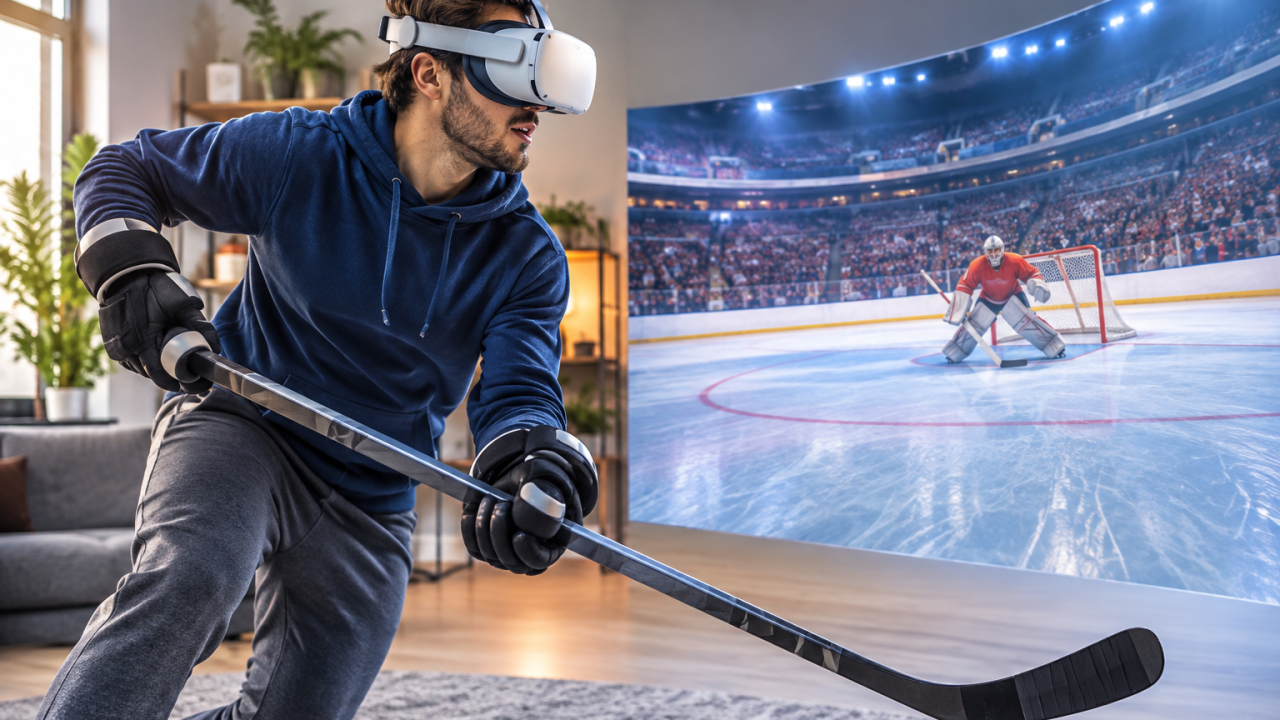
VR hockey is a thin genre with a few genuinely good options. VR Hockey League on Meta Quest is the closest thing to a real multiplayer rink, Sense Arena is the strongest training sim, and air hockey titles cover the casual end. No publisher has shipped a licensed NHL game in VR, so every worthwhile hockey game here comes from a small studio.
What Are the Best VR Hockey Games in 2026?
Five titles cover almost everything the genre offers right now. They split cleanly into three groups: online rink games, skills training, and table hockey.
We cover this topic in more depth in Best VR Tennis Games.
For a closer look at this topic, see our guide: Best VR Boxing Games.
- VR Hockey League (Meta Quest): online multiplayer ice hockey with skating, stick handling, passing and goalie play. It is the main answer most players give when someone asks for a proper hockey game in VR.
- Sense Arena (Quest, PC VR): a subscription hockey training platform with shooting, puck tracking and goalie drills, built with input from professional coaches rather than game designers.
- Skills Hockey VR (PC VR): a smaller Steam title focused on stickhandling and shooting drills. Expect rough edges in gameplay and visuals, but the puck physics hold up.
- Air Hockey VR (PC VR, Quest): fast one-on-one table play against AI or a friend, usually under $10.
- Sports Bar VR 2.0 (PS4, PC VR): a pub games collection with table hockey depending on the version, and the closest hockey-adjacent option PlayStation owners have had.
If you want a licensed roster, a franchise mode or a full 5-on-5 broadcast presentation, none of these deliver it. That gap is the defining feature of the category in 2026.
VR Hockey League Is the Closest Thing to a Real Rink
— Rate this game
VR Hockey League is the best full hockey game on Meta Quest because it is the only one with real skating, real stick control and online opponents on the same ice. Matches are small-sided rather than full teams.
Skating uses arm swings or thumbstick input depending on your settings, which matters more than it sounds. Players who swing their arms report less motion discomfort than players who glide on stick input, though both options are there.
The honest caveat is population. Lobbies fill fastest in the evenings in North America and Europe, and a quiet afternoon can leave you practicing shots alone in an empty rink.
Sense Arena Is the Training Tool, Not a Game
— Rate this game
Sense Arena is a hockey training platform on Quest used by amateur and professional players for cognitive and reaction drills. It is sold as a subscription, typically in the $30 to $50 per month range depending on the plan, and goalie packages usually cost more than skater packages.
Drills measure reaction time, puck tracking and decision speed, then score you against other users. The company publishes detail on its program structure and hardware add-ons at Sense Arena, including the stick and sensor accessories some drills expect.
Buy it if you actually play hockey. If you want to mess around for an hour after work, the subscription cost makes very little sense next to a $15 one-time purchase.
Air Hockey and Table Hockey Fill the Casual Gap
Air hockey titles are the cheapest way into hockey in VR, usually $5 to $10, and they work well in a small play space. They ask nothing of your legs, which makes them an easy sell for guests trying a headset.
The tracking is the appeal here. A real air hockey table is all wrist angle and timing, and modern inside-out controller tracking handles that far better than it handles full-body skating motion.
Can You Play VR Hockey on PS4 or PS VR2?
There is no dedicated ice hockey game on PS VR2 or the original PSVR on PS4. PlayStation owners have two practical routes: pub-style table hockey in Sports Bar VR 2.0 on PS4, or PC VR streaming if you also own a gaming PC.
PS VR2 gained PC support through an official adapter, which opens up Steam hockey titles that never shipped on console. That path needs a wired connection and a reasonably strong GPU, and the setup is covered in depth by outlets like Road to VR.
Quest remains the easiest platform for hockey specifically, because the standalone store is where the small studios building these games publish first.
What Reddit Threads Get Right About VR Hockey
The recurring Reddit complaint about VR hockey is accurate: the genre is underbuilt, and most threads end with the same two or three recommendations. VR Hockey League comes up most, followed by Sense Arena for players who train.
The second thing those threads get right is locomotion. Skating is the hardest part of the sport to simulate, and arm-swing movement is what most comfortable players settle on after a few sessions.
Where the threads age badly is pricing and availability. App Lab titles move, get renamed or go free, so a two-year-old comment is worth a read but not worth trusting on cost.
Why Hockey Is Harder to Build in VR Than Golf or Tennis
Hockey combines three things VR handles poorly at once: continuous skating, a two-handed implement, and physical contact. Golf and tennis need one of those, which is why those genres have polished, popular titles and hockey does not.
- Skating: your feet stay planted in the real world while your body moves at speed on screen, which is the classic recipe for discomfort.
- Stick control: a hockey stick is held in two hands at different points, so the game has to infer a rigid object from two separately tracked controllers.
- Puck physics: a puck on ice is low friction and fast, and small tracking jitter turns into wildly wrong shot angles.
- Contact: body checking has no safe physical analogue in a living room, so most games simply remove it.
Compare that to Walkabout Mini Golf, which supports eight players per lobby and more than 30 courses, including licensed themes, on a base game of roughly $15 with course packs around $3 to $10. Slow, seated-friendly sports scale cleanly in VR. Fast contact sports do not.
Games Similar to VR Hockey League Worth Trying
If hockey leaves you short, the best alternatives are other team sports built for the same stick-and-goal instincts. These genres have deeper libraries and far busier lobbies.